What Is Programmatic Audio Advertising?

Programmatic audio advertising uses automated, data-driven technology to buy and place audio ads in real time. Instead of purchasing traditional radio spots, brands can now reach audiences through streaming music services, podcasts, and smart speakers—with precision and scale.

Why Programmatic Audio Works

With more people consuming content on-the-go, audio provides a unique opportunity for marketers to connect with audiences during moments when visual ads can’t. Using advanced targeting, programmatic platforms deliver ads based on listener demographics, interests, and behavior. That means your message reaches the right people—when they’re most likely to listen.

Key Benefits for Digital Marketers

  • Targeted Reach: Connect with specific audiences based on data, not guesswork.
  • Real-Time Optimization: Adjust campaigns instantly for better performance.
  • Measurable Results: Track impressions, engagement, and ROI with detailed analytics.
  • Cross-Platform Presence: Reach listeners across podcasts, music apps, and smart devices.

Integrating Audio Into Your Marketing Strategy

Adding programmatic audio to your digital marketing mix amplifies your brand’s voice across multiple touchpoints. It complements other strategies like display, social, and search advertising—helping build a more cohesive and engaging customer journey.

Turn Up the Volume on Your Brand

Programmatic audio is not just about being heard—it’s about being heard by the right audience. For companies looking to grow brand awareness and engagement, this innovative approach delivers results that resonate.


Ready to make your brand heard? Contact ES Group Marketing today to launch your programmatic audio campaign and start reaching the right audience with the power of sound.

In today’s competitive online world, Pay-Per-Click (PPC) advertising is one of the most effective ways to drive qualified trafficgenerate leads, and increase sales. Unlike organic strategies that take time to build momentum, PPC delivers instant visibility on search engines like Google Ads and Bing Ads, allowing your business to reach customers the moment they search for your products or services.

With PPC marketing, you only pay when someone clicks your ad—meaning every dollar goes toward connecting with people who are actively looking for what you offer. Campaigns can be precisely targeted by location, keyword, audience behavior, and even time of day, ensuring your marketing budget is used efficiently.

PPC also provides real-time analytics and measurable results. You can track which ads perform best, which keywords convert, and how your campaigns drive return on investment (ROI). When combined with Search Engine Optimization (SEO) and other digital marketing strategies, PPC helps your business dominate both paid and organic search results.

If you want to increase visibility, attract ready-to-buy customers, and stay ahead of the competition, PPC marketing is an investment your business can’t afford to skip.

In today’s fast-moving digital world, social media is one of the most powerful ways to connect with your audience and grow your brand. But staying active, consistent, and strategic on every platform takes time—and that’s where a professional social media marketing agency can help.

At ES Group Marketing, we specialize in social media management services that help businesses increase engagement, attract new customers, and build lasting brand loyalty. Our team handles everything—from content creation and posting schedules to community engagement and performance tracking.

We develop data-driven strategies designed to help your business thrive across Facebook, Instagram, LinkedIn, TikTok, and more. Every post, story, and campaign is crafted to strengthen your brand voice and drive measurable results.

Our Social Media Management Services Include:

  • Custom content creation and scheduling
  • Audience engagement and community management
  • Paid social media advertising campaigns
  • Analytics and detailed performance reporting
  • Brand monitoring and reputation management

Whether you’re looking to expand your audience, launch targeted social ad campaigns, or improve your overall online presence, our social media experts have the tools and experience to help your brand stand out.

Ready to boost your social presence?
Contact ES Group Marketing, a trusted social media marketing agency, and let’s create a strategy that drives real results for your business.

Programmatic video marketing is transforming the way businesses reach their audience online. By combining data, automation, and real-time bidding, programmatic advertising delivers highly targeted video ads across streaming platforms, websites, and social media channels.

Unlike traditional ad buying, programmatic video ensures your campaigns are cost-effective and data-driven. Brands can target customers based on demographics, location, online behavior, and interests, making every ad placement more relevant and impactful.

The benefits are clear: improved audience targeting, increased ad efficiency, and measurable results. With programmatic video ads, you can maximize brand awareness, drive customer engagement, and boost conversions—all while reducing wasted ad spend.

If your business is looking for smarter digital advertising solutions, programmatic video marketing offers the automation, precision, and performance you need to stand out in a competitive online world.

What is SEO and Why Does it Matter?

Search Engine Optimization (SEO) is the practice of improving a website’s visibility on search engines like Google. SEO is more than just a tactic — it’s a core strategy that helps businesses reach their audience, drive quality traffic, and increase conversions.

How SEO Benefits Companies

1. Increased Online Visibility
With billions of daily searches, SEO ensures your business gets discovered by potential clients at the exact moment they’re searching for your services.

2. Cost-Effective Lead Generation
Unlike paid ads, SEO provides long-term results without continuous ad spend. Companies can use SEO to generate consistent, high-quality leads.

3. Builds Trust and Authority
Ranking high in search results signals credibility. Strong SEO strategies position your company as an industry leader, helping to build trust with clients.

4. Better ROI for Digital Campaigns
SEO amplifies the results of other digital marketing efforts, from content marketing to social media, by ensuring they reach the right audience.

Key SEO Services Marketing Companies Should Offer

  • Keyword Research & Strategy – Targeting the right terms for client industries.
  • On-Page Optimization – Enhancing content, titles, and metadata for relevance.
  • Technical SEO – Improving speed, mobile performance, and site structure.
  • Content Marketing – Creating valuable, keyword-rich content that ranks.
  • Link Building – Strengthening domain authority with quality backlinks.
  • Analytics & Reporting – Tracking progress and refining strategies.

Final Thoughts: SEO as a Growth Driver

SEO is not just another service — it’s the foundation of digital success. By investing in proven SEO strategies, businesses can build stronger online visibility, attract more qualified leads, and achieve sustainable growth.

Your website is often the first impression people have of your business. If it feels outdated, slow, or hard to navigate, visitors may leave before discovering what you offer. A website refresh doesn’t always mean a complete redesign—it can be as simple as updating visuals, improving load speed, or making the site mobile-friendly.

Benefits of a refresh include:

  • Stronger brand image with modern design.
  • Better user experience through clear navigation.
  • Higher search rankings thanks to updated performance and SEO.
  • Increased engagement by showcasing current products, services, and content.

Refreshing your website ensures you stay relevant, trustworthy, and competitive in today’s digital landscape. Don’t let an outdated site hold you back—contact us today to see how a refresh can boost your business.

In today’s fast-moving digital landscape, reaching customers at the right time and place is more important than ever. One strategy that’s transforming how businesses engage with their audiences is geofencing marketing.

What is Geofencing?

Geofencing is a location-based digital marketing tool that uses GPS, RFID, WiFi, or cellular data to create a virtual boundary around a physical location. When someone enters or exits this “fence,” businesses can trigger targeted ads, notifications, or special offers directly to their mobile device.

Think of it as drawing a digital circle around a store, event, or even a competitor’s location — and instantly connecting with potential customers nearby.

How Geofencing Works for Businesses

  • Retail Stores: Send discounts when shoppers walk by.
  • Restaurants: Deliver lunch specials to nearby office workers.
  • Real Estate: Reach buyers visiting open houses in a neighborhood.
  • Events: Engage attendees with offers or reminders inside a venue.
  • Service Providers: Target households within a specific area.

Benefits of Geofencing Marketing

  • Hyper-Targeted Advertising – Reach the right people in real time.
  • Boosts Engagement – Connect with customers when they’re most likely to act.
  • Drives Foot Traffic – Encourage in-store visits with immediate offers.
  • Improves ROI – Reduce wasted ad spend by focusing only on local, high-intent audiences.
  • Competitive Edge – Target audiences near competitors’ locations to win business.

Best Practices for Geofencing Success

  1. Define Your Boundaries Carefully – Too wide reduces relevance, too narrow limits reach.
  2. Align Offers with Intent – Send the right message for the customer’s location and timing.
  3. Use Strong Calls-to-Action – Immediate and relevant offers convert better.
  4. Measure & Optimize – Track impressions, visits, and conversions to refine your campaigns.
  5. Respect Privacy – Always comply with data protection and opt-in requirements.

The Future of Geofencing Marketing

With AI-driven personalization, 5G connectivity, and the rise of wearable devices, geofencing will only become more precise and impactful. Brands that embrace this technology today are positioning themselves to stay ahead in the competitive digital marketplace.

Bottom Line: Geofencing isn’t just about location—it’s about relevance. When businesses reach the right customer, in the right place, at the right time, results follow. Contact us today to launch your geofencing campaign and start driving measurable results.

The Future of Business Growth: Why Digital Marketing Is No Longer Optional

In today’s fast-paced digital world, your customers are just a click away. Whether they’re scrolling on social media, searching on Google, or browsing emails, one thing is certain: if your business isn’t visible online, you’re missing opportunities. That’s where digital marketing steps in—not just as a trend, but as a necessity for growth.

Why Digital Marketing Matters

Traditional marketing—billboards, radio ads, and print—still has its place. But the reality is simple: your audience spends more time online than anywhere else. Digital marketing ensures you’re present in those moments that matter most.

Here’s what it brings to the table:

  • Targeted Reach: Instead of casting a wide net, digital campaigns allow you to zero in on your ideal audience by age, location, interests, and behavior.
  • Cost-Effective Results: Compared to traditional advertising, digital channels deliver measurable results at a fraction of the cost.
  • Data-Driven Decisions: Every click, share, and conversion provides valuable insights that help you refine your strategy.
  • 24/7 Presence: Your brand works for you around the clock, ensuring visibility even when your doors are closed.

Core Services Every Business Needs

At ES Group Digital Marketing, we specialize in strategies designed to help businesses thrive online. Our core services include:

  • Targeted Display Advertising: Real-time, targeted advertising across multiple online channels.
  • Geofence Advertising: Engage audiences through real-time, location-specific advertising.
  • Search Engine Optimization (SEO): Get found on Google when it matters most.
  • Social Media Marketing: Build meaningful connections with your audience across platforms.
  • Pay-Per-Click Advertising (PPC): Drive instant traffic and measurable leads.
  • Website Design: Creating visually engaging and user-friendly online experiences.

The Bottom Line

Digital marketing isn’t about chasing trends—it’s about building sustainable growth. With the right strategy, your business can reach more customers, build stronger relationships, and achieve measurable success.

At ES Group Digital Marketing, we don’t believe in one-size-fits-all solutions. We tailor every campaign to your unique goals, ensuring you get the maximum return on your investment.

📩 Ready to grow? Contact us today and let’s create a strategy that takes your business to the next level.

10 Ways to Use Google Analytics to Validate Your Digital Marketing -ES Group

In the world of digital marketing, having a sufficient amount of data is important. It’s also difficult to compile and examine all this information through traditional methods alone. It’s time to throw Google Analytics into the mix.

The ways in which digital marketers can use Google Analytics go far beyond just checking out the number of visitors to their website. Using Google Analytics, marketers are able to consolidate their data into one place. This allows them to have a clear view of how their strategies are performing and identify places to improve.

Person using Google Analytics for their business

But, how can marketers make sure they’re using all of Google Analytics’ features effectively? Here are 10 ways to use Google Analytics to validate your digital marketing programs:

1. Segment Users and Content via Goals and Filters

Google Analytics allows marketers to track users across their marketing channels. For instance, marketers can determine whether or not visitors are coming from search versus social media, or an external source versus an internal source.
In addition to tracking users by channel, marketers can also track what content they’re engaging with. This allows marketers to see whether or not their message is being received.
The process of tracking users and content might sound time-consuming, but it can be simplified by using goals and filters.
For example, a marketer could create a goal for a s

pecific page on their site that they want to track. This means that whenever a visitor lands on that page, Google Analytics registers it as an accomplishment.
Afterward, the marketer could create a filter that excludes certain referral traffic from their goal page. It’s important to do this because referral traffic can easily skew the data.

2. Create a Goal Flow

In addition to tracking what users are doing, marketers can learn where they’re going. Creating a goal flow will allow marketers to see how users move from one page on their site to another, and even why they don’t complete a goal.
Marketers may use this information to find out what content on their homepage or landing page isn’t resonating with the reader or the path that is most effective in getting users to accomplish their goal. It can also give marketers insight on how they can improve their site’s efficiency, which is especially useful when dealing with eCommerce sites.

3. Create a Funnel Report

When creating a goal flow, marketers can also add a funnel report. This will allow the marketer to see how many visitors are dropping off from one page of their goal flow to another. It can also allow them to see how many visitors are completing a goal.
For example, if a marketer notices that nobody is moving from their homepage to their contact page or about page, they may need to optimize these pages. It could be that there is a problem with the messaging, call-to-action, or CTA. Creating a funnel report allows marketers to make these kinds of updates quickly and efficiently.

4. Optimize for Traffic Quality

Marketers may use Google Analytics to track the number of users that come to their site, but this isn’t enough. Marketers should also track the quality of traffic that they’re receiving. Quality of traffic is a measure of how many users are likely to engage with the site rather than just passing through.
To improve the quality of the traffic that they’re receiving, marketers should search for keywords that are sending them visitors that aren’t likely to engage with their site. For instance, marketers might want to get rid of keywords associated with poor search engine optimization or that are more likely to send them highly targeted visitors.
Google Adwords allows marketers to track ad costs, click-through rates, and conversions. This type of information is helpful in understanding the quality of traffic that a marketer is receiving from their campaign. It can also help marketers adjust their strategies accordingly, which is especially important when trying to meet a specific ROI or return on ad spend.

5. Track Ecommerce Sales

In addition to tracking certain actions on a site, marketers can also track eCommerce sales. This allows marketers to see how many users are converting into paying customers.
By using Google Analytics, marketers can also track eCommerce data such as a user’s average order value, number of transactions, and total revenue. All this information can help businesses double down on strategies that are working and end ineffective ones. It is of crucial importance for marketers because it helps them understand the health of their business.

6. Track Offline Sales

In addition to tracking website engagement, marketers can also track offline sales. With Google Analytics’ offline tracking, marketers can see how many users have come to their store and what they’ve purchased.
This information is valuable in finding out whether or not a user has experienced their offer, and it can be used to create reports for offline marketing efforts. It can also help marketers see if the campaigns that they’re running for their products and services are driving sales. Tracking offline sales might not look like a priority, but it’s an important step in understanding the health of the business and eventually increasing ROI.

7. Track Social Media Engagement

Social media has become an integral part of businesses’ marketing strategies, and it’s important that marketers are tracking its impact. Marketers can use Google Analytics to track social media engagement via goals and filters. For instance, they can track how many users have come from a social media platform and whether or not they’ve completed a goal.

Marketers can also track the number of social media engagements, such as how many times a user has shared their posts. It is also possible to track conversions from social media via the number of downloads, registrations, or click-throughs. Social media engagement is a valuable metric because it can give marketers an idea of the overall buzz around their brand.

8. Track Offline Social Media Engagement

In addition to tracking social media engagement online, marketers can also track its effectiveness offline. For instance, they can use Google Analytics to track how many users have come from Facebook.

Marketers might also use Google Analytics to track the number of users that have come from offline social media engagement, such as how many Facebook users have come to their store. It’s important for marketers to see whether or not offline and online social media engagement overlap.

9. Track on Mobile and Tablets

It’s crucial for marketers to track the number of users who are accessing their site on mobile and tablets. Many users now prefer to use their smartphones or tablets to access the web, which means that marketers need to track traffic from these devices.

In addition to tracking on mobile and tablets, marketers need to make sure that their site is mobile-friendly. This allows users to access their content without any problems on a mobile device, which can also have a positive impact on SEO. Marketers should regularly test their site for mobile friendliness and see if there are any changes they need to make in order to optimize it for mobile. If a site isn’t optimized for mobile, users can end up leaving and going to a competitor’s website.

By using Google Analytics, marketers can track how many users are engaging with their content on mobile devices and tablets. It’s also possible to track the bounce rate and page views, which can help marketers understand how engaged users are with their site.

Mobile engagement is crucial, as users are often more likely to act within a shorter timeframe when they’re using mobile devices.

10. Track Search Engagement

Marketers should track the number of users who are coming to their site via search engines. It’s important to keep in mind that there might be multiple keywords that are driving users to their site.

Marketers need to make sure that they’re tracking the number of times each keyword is used, along with the conversion rate. It’s a good idea to use a unique URL for every keyword in order to properly track engagement and conversions.

By using Google Analytics, marketers can easily track these metrics and see which keywords are bringing in the most traffic. This is crucial information to have, as it can help marketers understand which keywords to prioritize and optimize for. This also allows them to see the number of searches that are being made for their company name, product name, or service.

Conclusion

Google Analytics is one of the best tools for marketers to use in order to track metrics and other important information. It’s free, easy-to-use, and provides valuable insights that can help marketers improve their site and increase conversions.

Marketers should regularly review the various metrics, reports, and information provided by Google Analytics in order to discover areas for improvement. This allows them to make changes and see the results of those changes in a short timeframe, which can help them optimize their website and lead to a higher number of conversions.

By making sure that Google Analytics is tracking the correct information, marketers can have access to invaluable insights that can help their site succeed. Make sure that your site is getting the traffic it deserves by tracking metrics with Google Analytics!

 

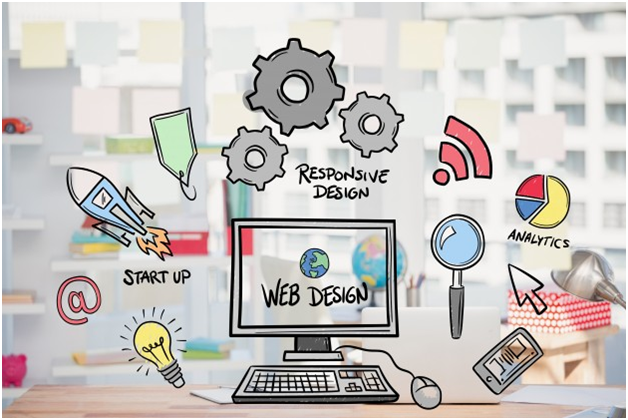
5 Things To Consider Before Choosing Web Designing Agency

A delightful and attractive website is the crux for any business. A unique website with good web design has the potential to gain more audience, who can turn into prospective customers for the business. More than 90% of the people around the world are online, so having a well-designed website is the best approach to deal with the clients globally. It is highly influential in generating sales and driving success to your business. Hiring the right web designing agency to get the best web designing services to fit your business is very important.

In this blog, we will highlight things to consider before hiring a web designing agency.

1.Finding your web design project requirements:

Web design is not just the design but a lot more in terms of usability in the long run. Web design is an infrastructure for your business that includes ergonomics, user habits, navigation logic, custom layouts and other things that simplify the using of websites and help access information. So if you are looking for a brand new site, check whether or not your requirements are met.

2. The time required for the completion of the project:

While the overall time taken for the project is extremely important, it is also essential to check on the time management of your project at each stage. The more experienced the agency, the more efficiently the project is accomplished in a given timeframe.

3. Cost estimation and your budget allocation:

Before hiring an agency, consider both the upfront cost and long term value for your website. Be mindful of how much you can spend, whether or not you are charged on an hourly basis, if there is a cap on hours, or if the agency might cover the unexpected delays and unsatisfactory work or other issues in the process.

4. Web design and development process:

One must know how a web design company approaches website design and development so as to gain insight into its experience and its strategy. This knowledge allows you to manage key milestones and the number of revisions made at each phase and impact on the timeline.

5. Warranty on their work:

It is crucial that you get to know if there is a guarantee on how the website will function as it was expected based on the proposal. If you are not charged for any sort of bug-fixes post-launch, shows a great deal of integrity of the web agency.

Bottom-line: A user-friendly website is your virtual sales force, so make sure your project is in the right hands. We are an expert website design and development company in Iowa, passionate to deliver websites that are not just beautiful but are truly functional in delivering the best results.